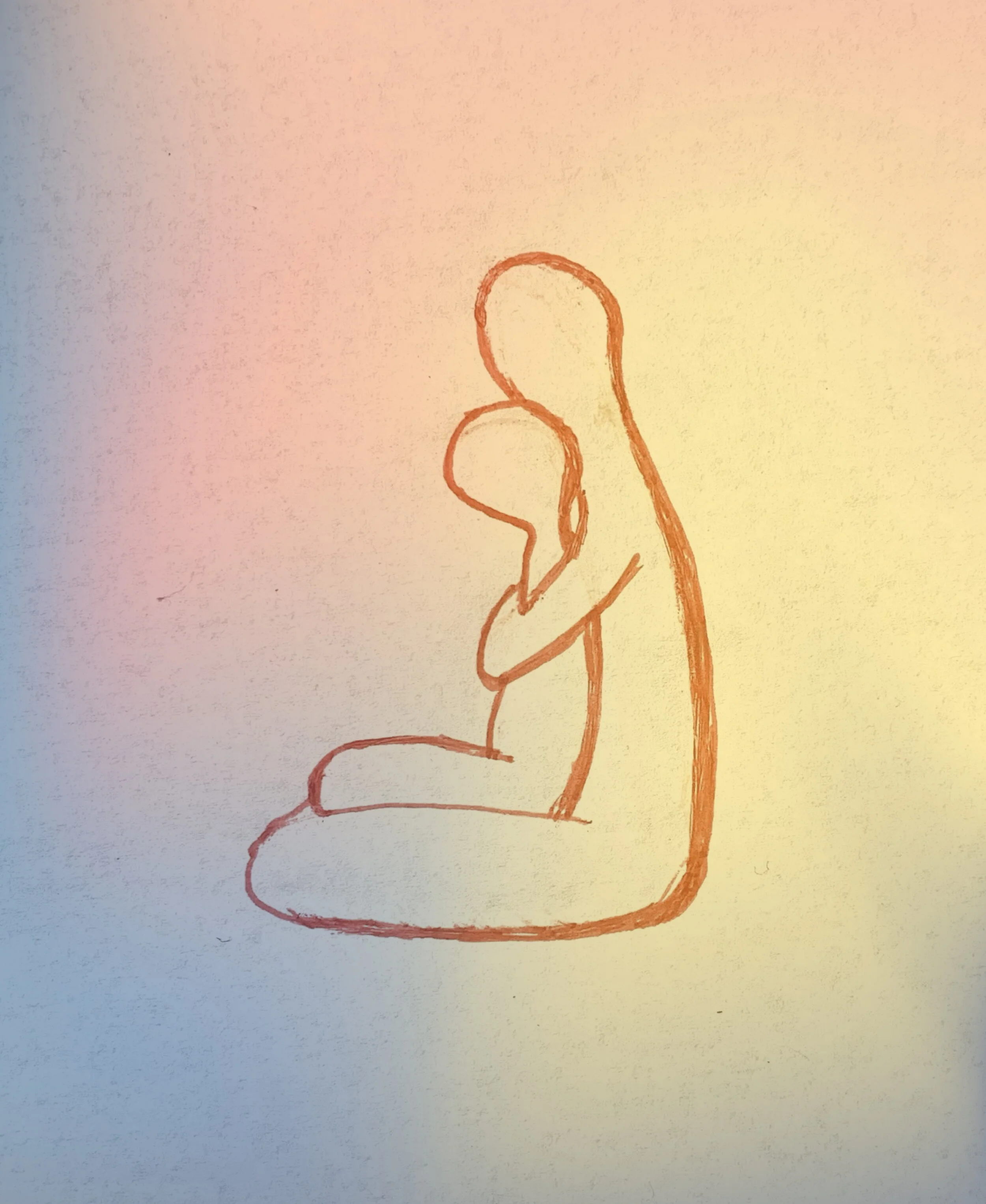
Some years ago, when I was feeling discouraged in my search for love, a good friend suggested I concentrate on loving myself. I was a little taken aback, but I also recognized that she was pointing to an area of opportunity for me. Maybe I had a lack inside that I should investigate.
I googled self-love, and found a list of self-care activities, like soaking in a candlelit bubble bath. These seemed frankly boring. I didn’t think any of them would make me feel any differently toward myself.
But recently another friend shared an intriguing self-love practice. He said: look in the mirror every day. Tell yourself, “I love you,” say your full name, and then, “I really, really love you.” Do it daily, a hundred times.
If I had thought the bubble bath was not my style, I was even more reluctant about this practice. Talk to myself in the mirror? It sounded forced, artificial, ridiculous. I don’t talk to myself. It’s just not something I do.
Except of course I do, inside. Incessantly. I realized talking out loud was a way to bring my inside voice to the outside and focus on it. And I really respect this friend. Anything he recommends is worth trying.
So I went home, took a breath, mentally prepared myself to try embracing my flaws, and looked in the mirror.
I was surprised by what I saw.
Usually, when I look in the mirror, I’m checking my hair or washing my face. This time, I was looking at the person behind the face.
I imagined meeting this person the way I would meet a stranger at a party, and I gave her the benefit of goodwill that I usually give to others. She looked like a person I could enjoy meeting. She seemed open, a little vulnerable, ready to engage.
I said: I love you, Elisabeth Esther Sperling. I really, really love you.
Surprisingly, I didn’t feel awkwardness, but a curiosity about connecting. I listened for sincerity in myself. Did I mean it? Did I really love this person?
Repeating the sentences, I thought about how the person in the mirror wasn’t a stranger at all, but someone whose story I knew well. I saw the knowing appear in her eyes, reflected back to me.
Heartened that so far, at least I didn’t hate myself, I tried this exercise again in meditation.
I closed my eyes, sat in silence and said the words inside: I love you, Elisabeth Esther Sperling, I really really love you.
Who is talking to whom? I wondered. Are there two selves in there?
In a way, yes, I experience myself as two: the “I” and the “self.”
This taxonomy of the self is familiar to me from various wisdom traditions, but in case it’s new to you, let me explain.
The “I” is the source of my awareness, the root of it. I think of it as a pure light of consciousness that has shined since I was born, always the same, just peacefully watching.
The “self” is more of a changeling, the identity I’ve built over time, the part with attachments, desires and aversions, the part that struggles and seeks.
I wondered, does one of these love the other?
I tried being the “I”, addressing my “self:” I love you, Elisabeth Esther Sperling. I really, really love you.
As I said it, I did feel compassion. I certainly could sympathize with everything my “self” had been through in life. And I wished her well. I sent her a mental hug of encouragement.
I had thought that self-love would require judging myself to be worthy, feeling special or admirable, believing in a positive self-image.
Instead, I felt an open, grounded presence saying simply “I’m always right here, I’ve been here since you were born. I watch every thought and feeling you have. I know your struggle. I’m here for all of it. I’m paying attention, and I understand exactly how you feel. I see you.”
And yes, I felt like I meant it. I found I could say “I love you,” that way to myself, and feel whole with it. Nothing fake or forced there. On the contrary, it felt true and solid.
I also felt myself receiving that love. Its effect washed through by body, like a warm wave.
Then I tried being the “self,” returning the love. “I love you. I really really love you.”
As the “self,” I felt grateful to the “I” part of me. This time, love meant “Thank you for showing up for me, for sticking with me. I’m so relieved to know you’re always there for me.” Again, the feeling washed right through me.
Is this self-love? I think it’s a start.
Self-love is still an exploration for me, and I don’t know how relevant my experience will be for you. If you feel you could use more self-love in your life, I hope you’ll explore for yourself.
Perhaps you’ll try this meditation, with the mirror or without. Use your full name, and tell yourself, “I love you (full name). I really, really love you.”
It may feel intense. My friend who recommended it told me that the first time he tried it, he burst into tears, and yet, as he stuck with it, following Louise Hay’s course, he found it profoundly healing.
If you’d like to watch a dramatic depiction of this meditation in a movie, watch here.
Be gentle with yourself. If it feels painful, you can scale it back. You can say, “I am open to loving you,” or “I’m open to learning how to love you.” Find the words that feel right to you.
Try it in the mirror, or during meditation. Try it when you lie down to sleep at night, or when you wake in the morning.
Throw this “I love you” pebble into the pond of your inner world, and observe the ripples it makes.
See what you can discover about the ways those words are true for you.
Why do obvious team problems go unaddressed? The usual fixes, from pulse surveys to away days and perks, soothe the symptoms without touching the cause. So what stops everybody from going beyond the surface?
I've just started a round of interviews to solve this mystery. If you're a team leader, senior manager, or executive and you'd like to be interviewed, send me a message. I'll share the outcome of the study with everyone who takes part.
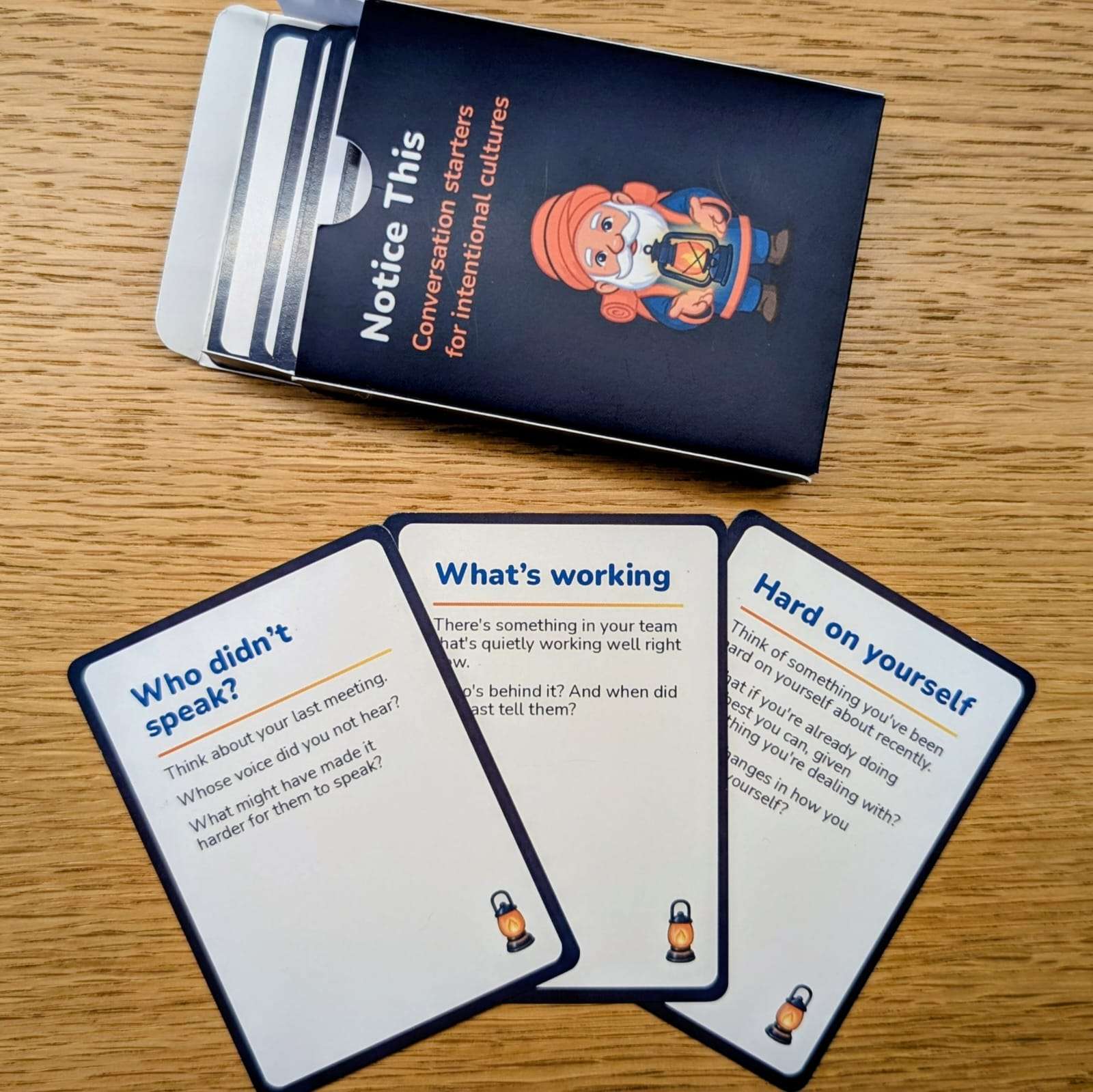
A few weeks ago, we launched our Hu.Be platform at the Engage Employee Summit in London. And to engage with people, we created this “conversation starters” card deck.