"How do you show real care and interest for a client without sounding inauthentic or manipulative?"
It's a brave question. It names something a lot of us think but rarely say out loud. Is all this relationship-building just manipulation in a nicer outfit?
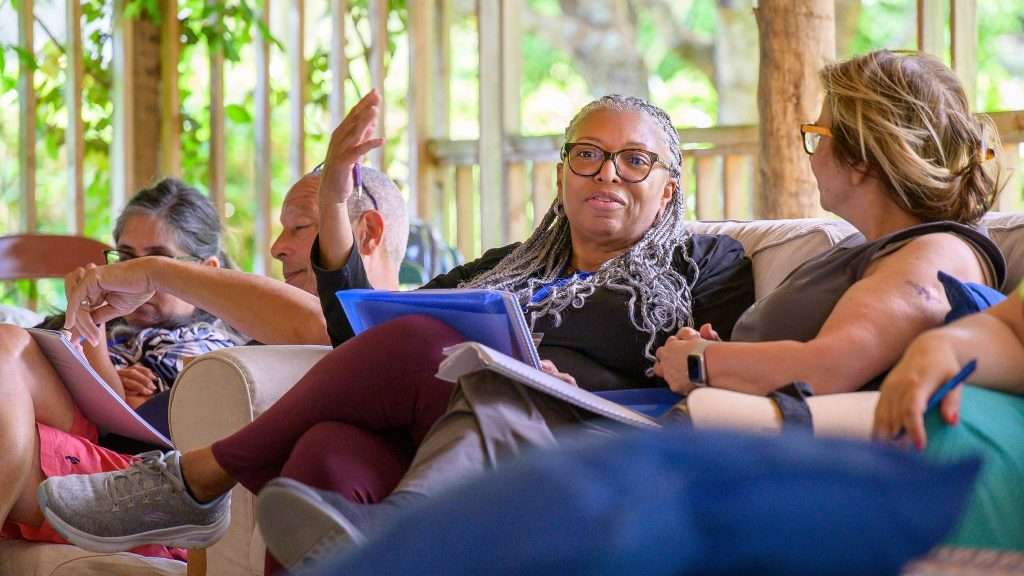
Mid-conversation at one of our workshops.
I reached for the standard answers, the kind you find in every book on the subject but, at the same time, I felt a sort of embarrassment before I even understood why.
The standard answers aren't bad.
Give value before you ask for anything.
Send the useful introduction, the honest replies, the "don't buy this yet" when it's true.
Get specific.
Remember the actual challenge someone is battling with, and follow up on it unprompted.
Be willing to lose the deal.
Telling someone you're not the right fit is the strongest signal that you're a caring advisor, not a closer.
Say the slightly harder thing.
Careful, respectful pushback shows more respect than easy agreement.
All good advice. I can easily stand behind every line.
However, halfway through giving that answer, I realised even I didn't truly believe my own words.
Why did they feel hollow coming out of my mouth?
Because every one of those is a way of showing care. And anything you can do to show care, you can also do without actually caring.
The introduction, the specific follow-up, the walking away from the deal: a person who feels nothing for you can perform all of it. You can build an entire career on that.
That's the trap hiding inside the question. It asks how to show care. And the moment care becomes something you show, you've already stepped onto the same ground as the manipulator.
So I paused. And I answered again, properly this time.
I don't think there's a way to show someone authentic care. The showing is where it goes wrong.
But there is a way to do care authentically. And it's not a technique.
It's reminding yourself that the person on the other side is an actual human being.
Not the decision maker. Not the budget holder. Not the person you need to convince. A human being, with dreams, fears, problems, small private satisfactions, and a whole life you know nothing about.
You don't perform that. You just hold it in mind.
And when you do, the care stops being something you have to show. It's already there, in how you listen, what you ask, the attention you give.
Now, it would be easy to turn this into a new list of techniques. "Hold the person in mind" could become its own little trick, five tips for seeing someone as human.
It doesn't work like that. The seeing comes first. The behaviour follows from it.
When you actually hold in mind that the person across from you has a whole life, things change on their own. You stop rushing them towards the answer you wanted. You ask a different question, and you wait for the real reply instead of the polite one. You notice when they go quiet, or when something touches them, because you're paying attention to a person and not steering a script.
You catch yourself, too. You notice when you're about to push, and you let go. You become willing to be useful even when it costs you, not because a book said it's good for business, but because you've stopped treating them as a means to your end.
None of that is a move. The authenticity isn't a tone you add. You know when salespeople try to lure you into a call and claim there’s “no agenda”? Authenticity is what you want to replace the agenda with.
And this isn't only about clients. Or bosses, or colleagues, though it's true of all of them.
I learned it slowly, and not very gracefully, with my mother.
For a long time, our relationship was hard. And for most of that time, I related to her as exactly one thing: my mother. The role. Which comes loaded with a lifetime of expectation, scripts, things she should have done, things she shouldn't have said, things I deserved and was owed as her son. Convictions I'd been learning and keeping since childhood.
As long as she was "my mother", I couldn't see her. The role was in the way.
What changed wasn't her. It was that, at some point, I started to see the woman.
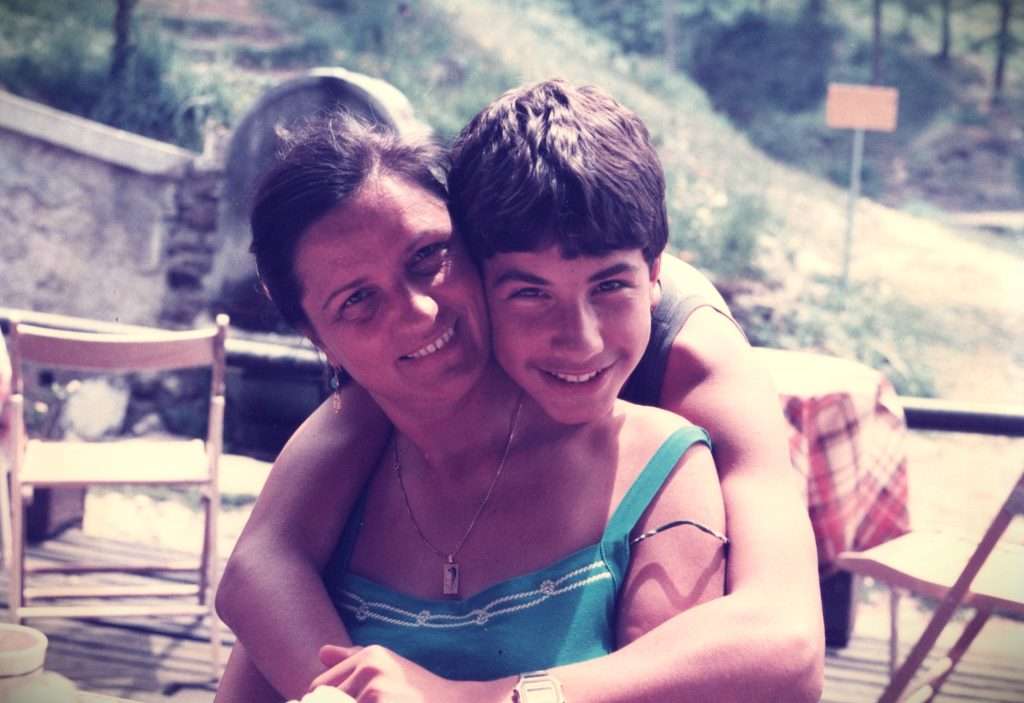
Me and my mum, 1985.
A person who'd had her own childhood, her own disappointments, her own dreams that didn't all come true, her own fears she never told me about, her own ways of coping with a life that hadn't always been kind to her. A whole person who existed long before I came along and handed her a role to play.
The moment I saw her, the woman and not the role, the way I treated her changed. Not because I'd decided to be a better son. Because I was finally looking at the right thing.
That's the whole of it.
We do it with clients. We do it with the people we report to, and the people who report to us. We do it with our own parents, our partners, our children.
We meet the role, and we miss the person.
The difference between care and manipulation is not about technique. It's just whether you're looking at a role, or a human being.
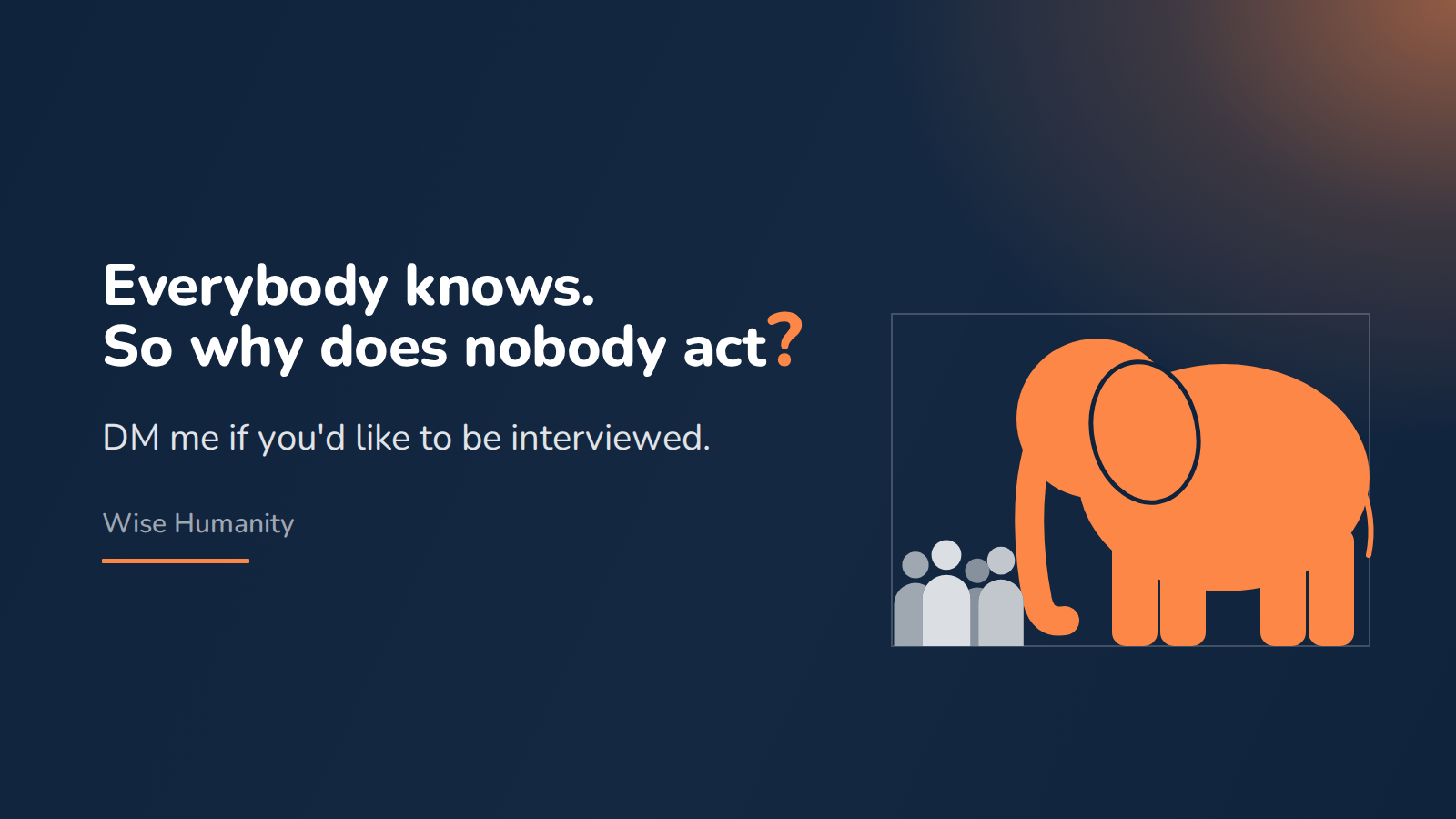
Why do obvious team problems go unaddressed? The usual fixes, from pulse surveys to away days and perks, soothe the symptoms without touching the cause. So what stops everybody from going beyond the surface?
I've just started a round of interviews to solve this mystery. If you're a team leader, senior manager, or executive and you'd like to be interviewed, send me a message. I'll share the outcome of the study with everyone who takes part.
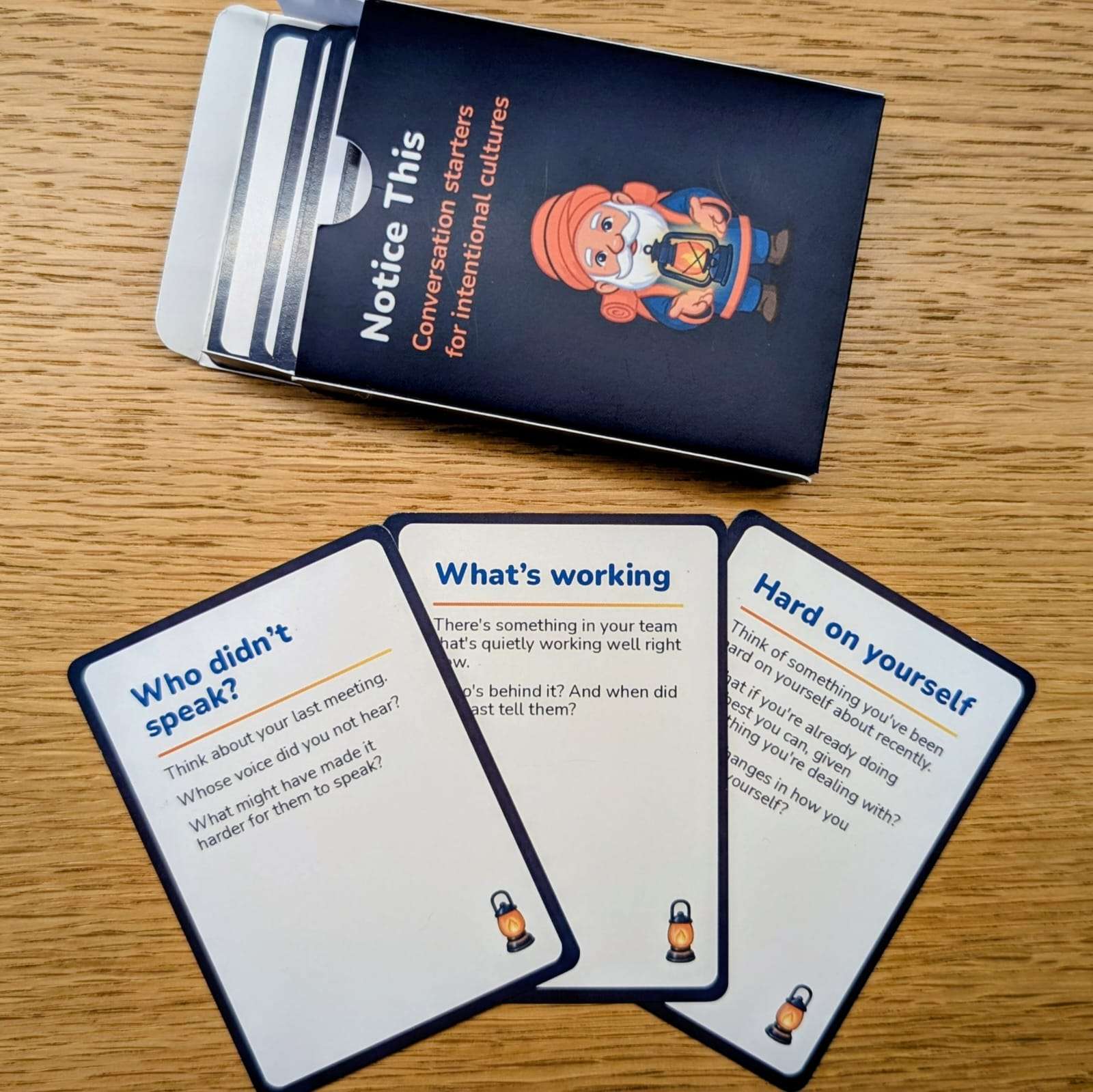
A few weeks ago, we launched our Hu.Be platform at the Engage Employee Summit in London. And to engage with people, we created this “conversation starters” card deck.
In almost every workshop I run, I ask teams a simple question: “How do you make decisions?” The most common answer is: “We look for consensus.” It sounds mature. Collaborative. Healthy....