Now, this may sound obvious in theory, but it’s not in practice. To different degrees, we act against our values very often. More often than we like to admit to ourselves, I dare say.
We say we care for our wellbeing, but then there’s always a reason to work late hours. We say we respect ourselves, but then we accept conditions that don’t cherish us (sometimes even abusive ones) from our love partner. We say we value the environment, but then we don’t recycle that plastic bag because, you know, what difference does one bag make? And so on.
Things can get even more extreme. Some ten years ago, while I was working for a global corporation, the executives asked me to lay off some members of my team. The process I was asked to lead was inhumane, barely legal. I resisted it a bit but, finally, I complied for fear of losing my job myself. The guilt accompanied me and I lost sleep for years as a result of that (not to mention that I was made redundant a few months later anyway).
We blame the circumstances for these choices. We feel trapped in the circumstances (I’m afraid to lose my job, I don’t want to upset my partner, I can’t afford to disappoint my boss) and we give more power to them than to our values.
At what price?
Whether small or big, these incongruences create fractures inside us. In a way, it’s like being a bit schizophrenic because we think one way and act another. We tell ourselves a story about our values and then behave in a different way.
Photo by Anne Nygard on Unsplash
The impact of those fractures is bigger than we think. And the other way around is also true: the impact of being completely congruent is incredibly powerful. It makes us feel more solid and grounded in ourselves, more self-confident, and more authentic when we interact with others. And it actually gives us a lot more energy and drive.
Do we really need to empower the circumstances so much? No, we don’t.
We can free ourselves from the circumstances
The human being has a psychological immune system inside that makes us adapt and react to virtually any situation we find ourselves in.
This happiness engine works particularly well when we are stuck, when we’re trapped.
I like to quote psychologist Dan Gilbert’s fun, compelling example that uses marriage vs. dating as a case of being trapped: “You go out on a date with a guy, and he picks his nose; you don't go out on another date. You're married to a guy and he picks his nose? He has a heart of gold. Don't touch the fruitcake!”
[If you want to learn more about these topics, I recommend watching his popular, very entertaining TED Talk, The surprising science of happiness]
The point is that we can always find a way to be happy with the circumstances. Our profound happiness is independent of the specific situation we find ourselves in.
We don’t need to empower the circumstances at the price of the fractures we bring upon ourselves with our incongruences. We can take our choices based on our values!
Empower your values
Here’s a powerful tool you can use every time you’re agonising over a decision or whenever you feel stuck.
Instead of agonising over the possible outcomes of your decision, empower your values: listen to them and act accordingly.
Think of all the time you’ve spent over a recent, difficult decision. How much time did you spend analysing and overanalysing all the possible outcomes and how much time did you spend reflecting on your values? Chances are you spent most of the time scrutinising the outcomes.
What you’ve been doing is empowering the circumstances more than your values.
But there’s no need to do that.
Your deep happiness is independent of the circumstances while it’s completely boosted by the congruence with your value.
This week’s blog post ends here, but if you want to work on knowing your values better, here’s an empowering, energising, potentially life-changing exercise.
The Value Tree
Here’s a list of values that Brené Brown put together in her Dare to Lead book.
Circle the ones that resonate the most with you. Feel free to add some more that might be missing. Then pick your top two. It can be very hard to pick your top two, but it’s a great exercise. The more you think about it, the more you see how your values are connected to each other and how one or two actually encompass all the rest.
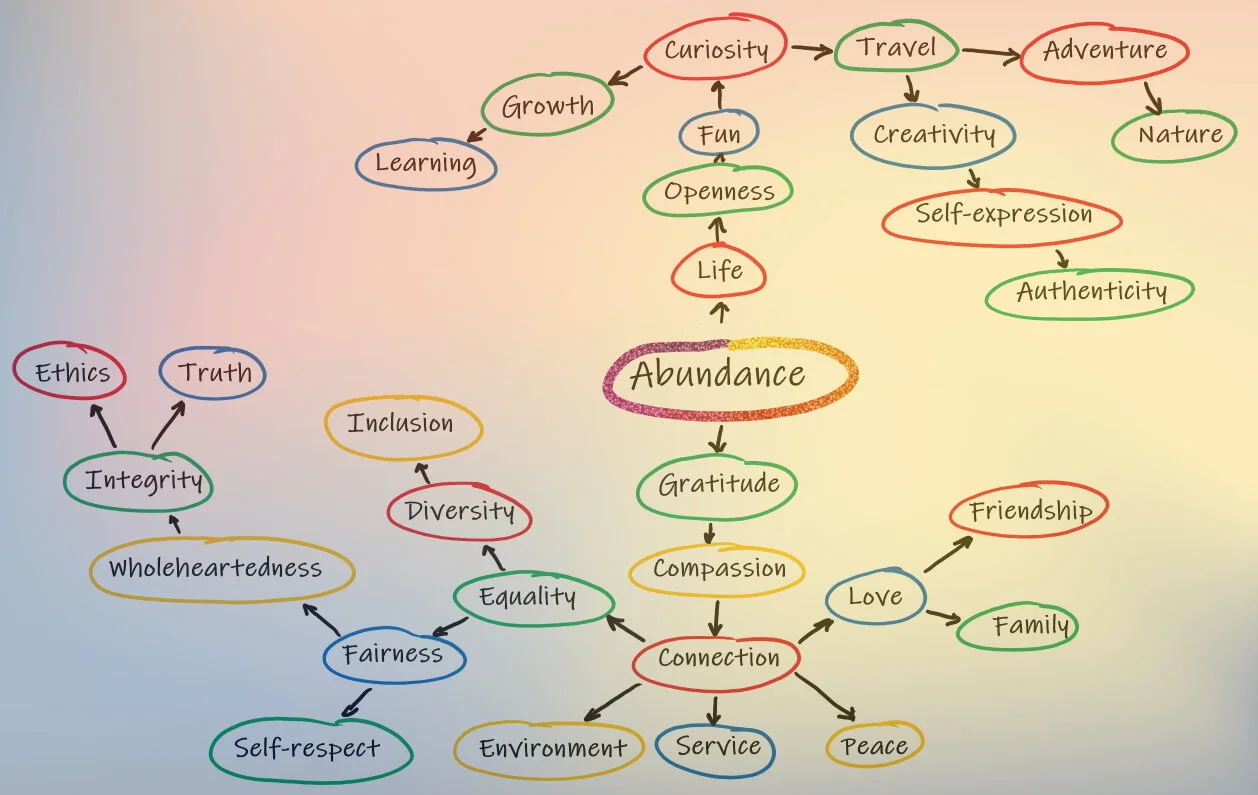
You can draw a values tree and create a map for yourself about how your values all align and flow together into your two highest ones. Write a couple of sentences about what they mean to you and how they fit together. Basically, see how your top two can call all the rest of your important values to mind, or even necessitate them, how they all flow in alignment.
Draw your tree.
Here’s mine. My overarching value is abundance, living from a place of generosity and giving back, as opposed to one of scarcity. I drew my value tree by hand, but if you want to use a cool template, here are some good ones used by some of our students.
The clarity this exercise brings is unparalleled. You’ve just erected a lighthouse to guide you in all difficult decisions with drive, self-confidence and authenticity.
Well done!
Now go out and follow your leading values with no fear.
Why do obvious team problems go unaddressed? The usual fixes, from pulse surveys to away days and perks, soothe the symptoms without touching the cause. So what stops everybody from going beyond the surface?
I've just started a round of interviews to solve this mystery. If you're a team leader, senior manager, or executive and you'd like to be interviewed, send me a message. I'll share the outcome of the study with everyone who takes part.
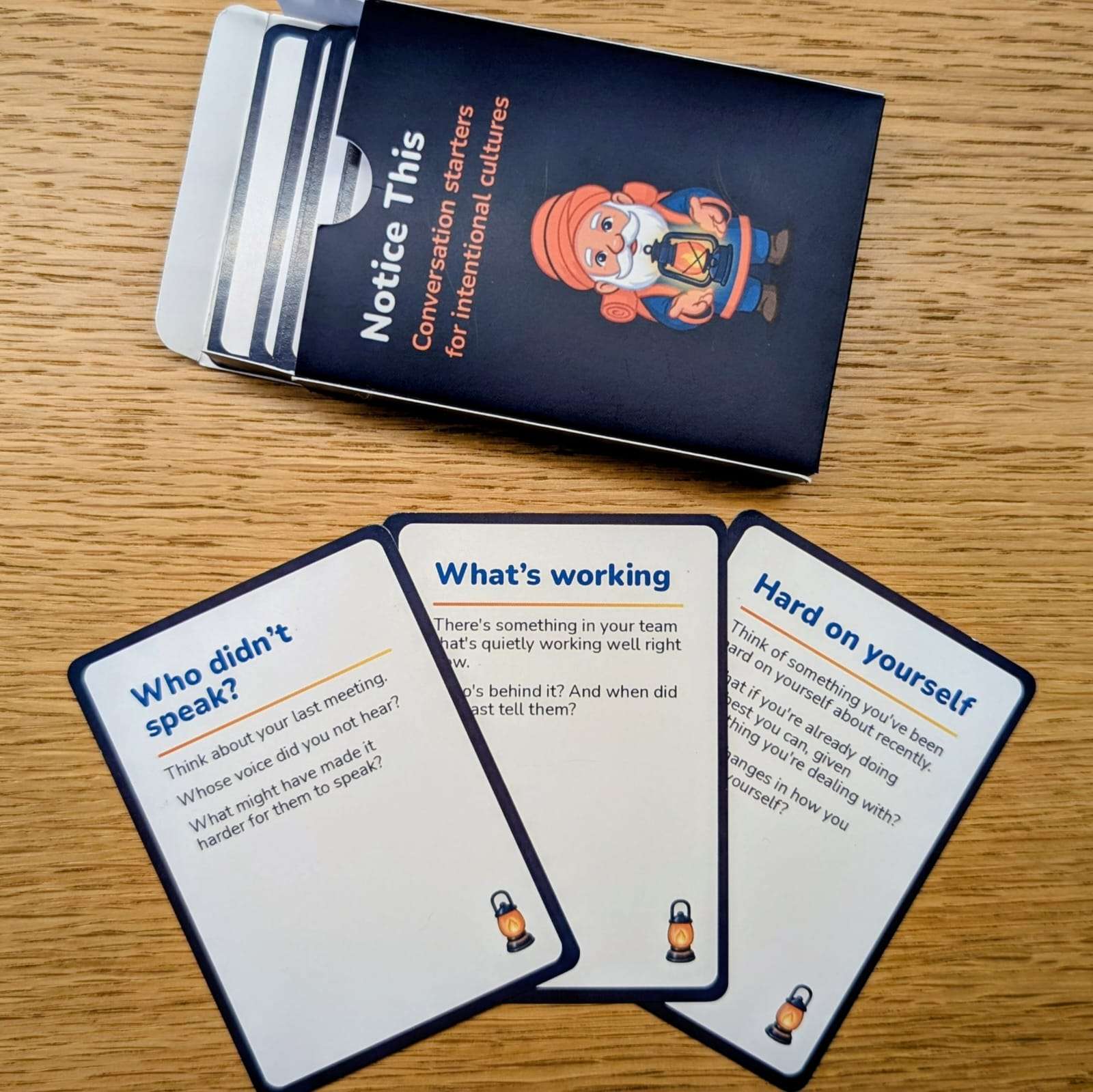
A few weeks ago, we launched our Hu.Be platform at the Engage Employee Summit in London. And to engage with people, we created this “conversation starters” card deck.