It can be scary to realize how one conversation may determine the future of a project, a relationship, or even a life. Four researchers spent twenty years studying how to navigate such moments, and distilled their...
Occasionally at Wise Humanity, we read a book that we feel compelled to share with our community. Today that book is Crucial Conversations: Tools for Talking When Stakes are High, by Kerry Patterson, Joseph Grenny, Ron McMillan and Al Switzler, a team of corporate trainers with immense experience in this area.
What Makes a Conversation High Stakes?
When I mentioned the book to a Wise Humanity group, hands shot up immediately with requests for a cheat sheet. It seems like everyone has a crucial conversation in their life, either one that’s not going well, or one that’s a silent, looming elephant in the room. I too can find myself at a loss for words in a pivotal moment, so I’m happy to comb through the advice and share the parts that resonate for me.
What is a crucial conversation? One where opinions differ, stakes are high and emotions run strong. Examples are: a boss giving an unfavorable performance review, a spouse addressing a lack of intimacy in a marriage, siblings negotiating the terms of an inheritance, or a parent dealing with a rebellious teen. The results of such conversations can have an outsized impact on the quality of our lives.
I’ve always thought that better communication could cure many of society’s ills. But communication doesn’t mean simply blurting out what you’re thinking and feeling. As my family’s saying goes (often spoken with a rueful smile after an epic misunderstanding), “Communication is a difficult art.”
Five takeaways from the book:
1. The onekey life skill of effective leaders, teammates, family members and friends is the capacity to skillfully address emotionally and politically risky issues. Period.
This is the audacious claim of the book. Though the authors began their twenty years of research with a broad scope, looking for what makes people generally effective in life, they soon noticed that all indicators pointed to this one specific skill, the ability to handle crucial conversations.
The authors cite statistics about the role of crucial conversations in varied settings, including:
Corporate settings. Studying over 2,200 workplace projects, researchers could predict with 90 percent accuracy whether a project would succeed or fail, purely based on whether participants were able to hold crucial conversations.
Marriages. If they are skilled at crucial conversations, couples can reduce chances of unhappiness or breakup by more than half.
Hospitals. When a doctor disregards protocol or makes a mistake, the odds of a nurse being able to initiate a crucial conversation about it are lower than one in twelve. The lack of this skill puts patients’ lives in danger.
Botched or avoided crucial conversations are like blocked arteries. They stop the flow of communication and can literally kill.
Effective communication, by contrast, leads to less stress, better health and greater effectiveness.
2. Most people fail at crucial conversations by making a fool’s choice between “silence or violence.”
We’ve all seen people choose the path of “violence”, maybe not literally by throttling their interlocutors, but by trying to force their views on others through raised voices, threats, insults, or more subtle uses of power. The effects of such conversations can be both devastating and far-reaching.
“Speak when you are angry, and you will make the best speech you will ever regret.”
, Ambrose Bierce
Since we fear this kind of violence, we often make the other fool’s choice: silence. But avoiding the conversation can have consequences that are equally severe.
This is a point worth pausing on for people like me, who tend to avoid confrontation. I’m afraid that once I start the conversation, it will spiral out of control. But the peace I’m preserving is illusory. In fact, silence is its own form of aggression that also kills the relationship or the project (or one’s inner equanimity), if more slowly.
The lesson here is that we do not have to make this choice between silence and violence. There is a third and better way. We can break the silence and hold the conversation in a safe way for a productive outcome. We just need to learn how to do it.
3. Some people are supreme experts at this skill.
Watching someone who is expert at crucial conversations is like watching a judo master. Jaws drop. A “wow” feeling pervades the room.
As I read examples of this level of mastery, I realized not only are some people bad and some people good at these skills; a handful of people truly excel.
The researchers found workplaces where certain people were acknowledged geniuses at tough conversations; there was often one person in a workplace whom people relied on to speak up at meetings because many were thinking the same thing but afraid to say it, influencing make-or-break decisions that might otherwise cause massive harm.
That’s why communication practice is a core part of our Team Accelerator, helping teams with the first steps to high-stakes conversations, developing confidence, emotional safety, and real-world tools to navigate tension together.
Less skillful people are tempted to understate or slightly sugarcoat their views to avoid offending. They feel they have to find a middle ground between honesty and respect. People who excel see no conflict between honesty and respect: they achieve both simultaneously, and they clear the air in a way that feels revelatory.
4. Establish safety, and constantly monitor and reinforce it as needed.
How can you be both completely open with your opinions and also completely respectful of the person you are disagreeing with? It may feel impossible, like trying to punch someone in the nose without hurting them.
But actually it’s more like giving constructive advice to a good friend.
Have you ever noticed that you feel open to feedback from a friend, even if the content of the feedback is quite challenging? This happens because you trust your friend to have your best interest at heart. Your friend respects you and doesn’t question your basic integrity, even if your actions need correcting. In this framework, anything can be said.
Again, this was a point I found worth pausing on. People don’t feel defensive about the issue at hand, the content of what you’re saying. It’s the conditions of the conversation that matter, whether safety and dignity are threatened.
“Respect is like air. As long as it’s present, nobody thinks about it. But if you take it away, it’s all that people can think about.”
But how can we create that same safety with someone who is not a close friend?
One method the authors recommend is to identify your common purpose with the person. Make it clear that your goal is not winning an argument, making the other person wrong or shaming them. Instead, you’re there to finish the project successfully, or serve the needs of the person you both care about. Position yourself side by side with the other person, as teammates.
To establish your common purpose, ask yourself: what do I really want for myself, for the other person, for the relationship? How would I behave if these were the results I really wanted? Be absolutely genuine with yourself, faking a common purpose won’t work.
After you make the conditions of the conversation safe, keep your eye on safety throughout the conversation. It’s easy to get caught up in a dispute over something that’s beside the point. The book gives a couple of examples of people who had to reorient themselves to their common purpose in the middle of the conversation, even in the middle of being criticized publicly. It takes confidence and steady nerves.
At any sign that one participant feels unsafe, stop and re-establish the safety. Otherwise, effective dialogue comes to a halt and silence or violence takes over.
5. The pool of shared meaning is the group’s (or couple’s) IQ.
Safety enables people to share their facts, stories and opinions into a shared pool of meaning. I love the image of the shared pool, it reinforces the sense of connection being built.
The authors recommend you fill it by “stating your path.” What happened first, what were the facts you perceived, what explanation occurred to you, and what else contributed to your current point of view? Let the other person see your logic, but state your conclusions tentatively, and invite them to share their path as well.
A Framework to Use: Start with Heart
The better we’re able to share and listen, the more our fund of knowledge and understanding grows, enabling us to make a good joint decision. The time and care invested in the shared pool will pay off in spades down the road.
******
Photo by Matthew Osborne on Unsplash
Practising as a Team
Of course, it’s one thing to read advice, and quite another to put it into practice. As I went through the book, I envisioned how I could use the tools in my current relationships.
“To know and not to do is really not to know.”
My favorite vignette in the book showed a VP standing up to a CEO in a high stakes group meeting. The CEO was pushing his opinion on the group while subtly discouraging questions and counterproposals, raising his eyebrow, his finger, and then his voice, just a little. Most of the people in the meeting stopped questioning him and quietly accepted his proposal. That’s when VP spoke up, starting with a few simple words: “Hey Chris, can I check something out with you?”
The VP went on respectfully but plainly and confidently, explaining in some detail how the CEO was violating his own guidelines for decision-making. The CEO took a breath, agreed with the VP’s critique, and course-corrected midstream, in front of a roomful of people.
This story illustrates how complete honesty and complete respect go hand in hand. The VP showed profound respect and trust in the CEO’s ability to listen to straight talk in front of all those people. I imagine the CEO had a moment of embarrassment, but he felt enough safety in his position to treat the feedback as though from a friend, keep the mutual goal in mind, and pivot in the direction that served that goal.
The others in the room were in awe of the VP. They approached the researchers afterwards, saying, “If you want to study effectiveness, study that guy.”
Next time I enter a crucial conversation, I’m going to try to channel his vibe.
If you’ve read this far, I imagine you are interested in trying out these tools help you take the first steps to high stakes conversations as well. I’d be very interested in hearing how it goes for you, let me know!
Want to go Further?
Want to improve how your team handles tension, feedback, and tough conversations?
The Wise Humanity Team Accelerator helps teams build emotional intelligence, psychological safety, and real-world communication skills, so difficult conversations stop being blockers and start becoming breakthroughs.
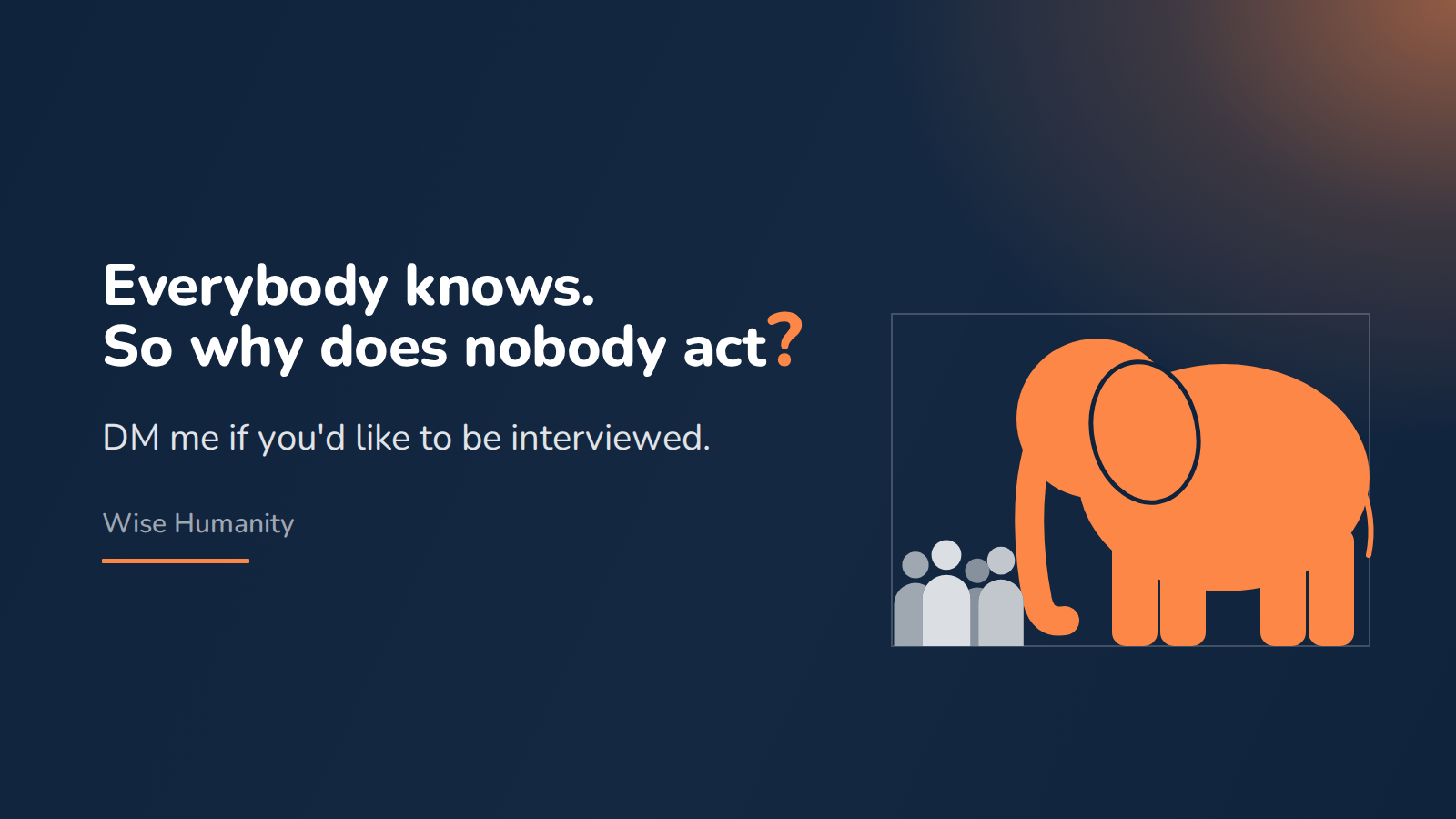
Why do obvious team problems go unaddressed? The usual fixes, from pulse surveys to away days and perks, soothe the symptoms without touching the cause. So what stops everybody from going beyond the surface?
I've just started a round of interviews to solve this mystery. If you're a team leader, senior manager, or executive and you'd like to be interviewed, send me a message. I'll share the outcome of the study with everyone who takes part.
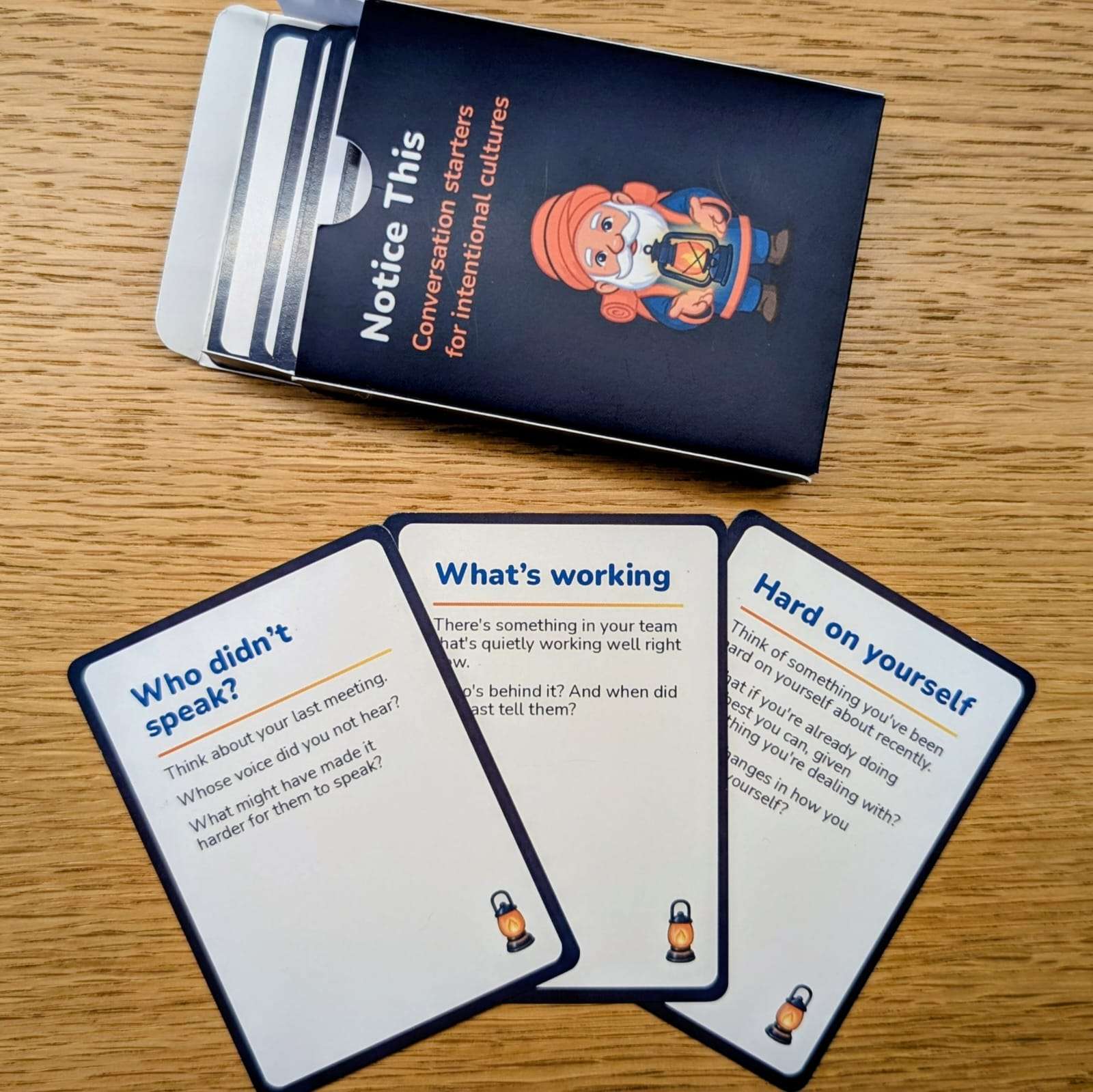
A few weeks ago, we launched our Hu.Be platform at the Engage Employee Summit in London. And to engage with people, we created this “conversation starters” card deck.