Our first reaction to fears is often to go into survival mode where fears paralyse or overwhelm us and all we can do is either hide or run away. But it doesn't have to be like that. We can also learn from fears...
In just over four months, I’ll turn 50. And if you’re up to accepting ONE piece of advice from me, here it is: whatever your age, wait no more! Start asking yourself this question now: What would you do if you had no fear?
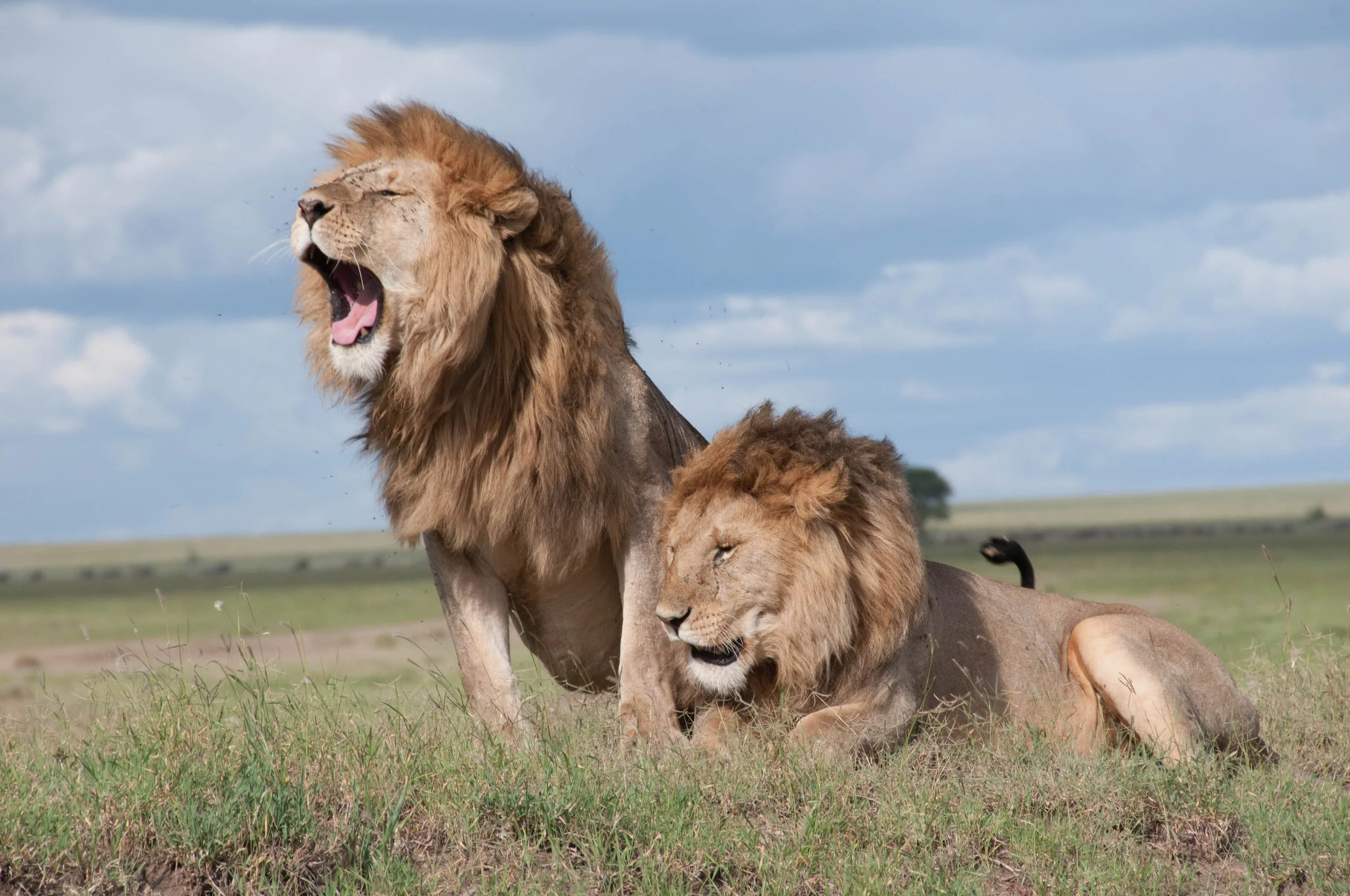
When humans lived in the savannah, fear was definitely our friend: when we’d hear the roar of a lion, fear would alert us that we needed to hide or run away.
Without fear, we wouldn’t have survived that environment.
That’s how we handle fear when we’re in survival mode: even nowadays, when we’re walking down a dark alley on our way home at night, fear can make us more alert, it can help us focus on the noise of a potential life-threatening danger, and it can make us run faster.
However, we experience fear way more often than when our lives are in danger.
We’re not honest with our loved ones out of fear. We don’t speak up at meetings. We procrastinate important tasks. We stay single out of fear of relationships. We stay in the wrong relationships out of fear of being single. We don’t follow our values out of fear for the circumstances. We don’t even try building the life that is right for us out of fear.
Whenever we experience fear, we switch to survival mode as if our life depended on those situations literally… as if they were hungry lions ready to eat us alive in the savannah.
That’s how we often live life, always in survival mode. And, by the way, spending too much time in survival mode has a long list of negative effects on our body and our health (have a look at Why Survival Mode Isn't the Best Way to Live, Psychology Today).
That’s how we often live life because we don’t know any other way to handle fears.
Photo by Iurii Ivashchenko on Pexels
A little story of survival mode
On the 13th and 14th of March 2020, when countries were closing the borders to go into the first lockdown, my new boyfriend of one and a half months, Fran, and I had a few very emotional calls over the course of 24 hours.
He lived in Barcelona (I live in London). We had only just met and we’d only spent three weekends together across one and a half months. Things were going super well for the beginning of a relationship, but we really didn’t know each other that well… and we were now faced with the threat of a potentially very long separation. Nobody knew how long the lockdown was going to be, or the long-term impact of COVID on international travel.
Since I can work remotely while he’s a physiotherapist, the conversation soon started gravitating around one option: me leaving London and moving in with him in Barcelona (for who knew how long).
My mind was exploding. All the possible (and the impossible) fears were hijacking it in turns.
I was leaving my home and my country, what if I could not come back? I could ask a friend to look after the cats, but what if something happened to my friend due to the pandemic? Or if they weren’t allowed to visit my flat anymore? What if my cats died? What if I got COVID on the flight to Spain? What if I got COVID in Spain and couldn’t have access to healthcare? What if I died? What if Fran and I didn’t click and living together became a nightmare? What if I couldn’t find any other solution and was stuck with an unfriendly stranger for weeks, months or years?
For a good 24 hours, I was paralysed and I couldn’t make a decision. I was in survival mode.
Photo by Sharon Mccutcheon from Pexels
The opposite of survival mode is expansion mode: that’s when we’re relaxed and aren’t worried for our lives. That’s when we grow, when we learn, when we invent new things, when we’re creative, when we find solutions to difficult problems, when we make expansive decisions.
While we were growing up, nobody taught us how to handle fear when we want to live in expansion mode.
That’s why we often don’t even accept fear. We don’t know what to do with it, we don’t want to experience it and we blind ourselves to our own fears. That’s why we don’t recognise it in so many things we do and in how we do them.
When we live in expansion mode, we realise that
Fears don’t give us any information about the likelihood that they’ll come true.
All those catastrophic scenarios may or may not happen regardless of whether I live in fear or not.
The fundamental question about fear is,
What is the self-limiting belief behind my fear that is making me live in survival mode?
During those calls with Fran back in March 2020, I wasn’t even conscious I was being hijacked by fears. The only thing I could think of was a long list of catastrophic scenarios. Which ones could happen?
But then Fran asked me: “What would you do if you had no fear?”
Of course! Fear!
I was in survival mode and I didn’t even know.
When Fran asked me “What would you do if you had no fear?” he pulled me out of survival mode into expansion.
The problem was not that those scenarios could or couldn’t occur, it was the first lockdown and nobody knew what would happen next, but that I was telling myself a self-limiting story that I wouldn’t be able to handle them, and I was blowing the consequences of those outcomes out of proportion.
Photo by Rakicevic Nenad from Pexels
In literally one second, I came back to my senses and, without the slightest doubt, I booked the flight for the next day and, on the 15th of March, three hours before Spain closed the border, I landed in Barcelona and moved in with an almost-stranger… just to spend three amazing months locked down with him 24/7.
Of course, things could have gone really badly, but I knew that I’d be able to handle them. Everything else was just survival-mode self-limiting beliefs.
*****
So, the next time you realise your fears are overwhelming you and making you live in survival mode, ask yourself:
What would I do if I had no fear?
I’m not advocating that you then go out and take the first action that comes to mind. But by just asking yourself that question, you’ll be able to spot your self-limiting beliefs and to bring new possibilities into the horizon of your hypothetical outcomes.
Why do obvious team problems go unaddressed? The usual fixes, from pulse surveys to away days and perks, soothe the symptoms without touching the cause. So what stops everybody from going beyond the surface?
I've just started a round of interviews to solve this mystery. If you're a team leader, senior manager, or executive and you'd like to be interviewed, send me a message. I'll share the outcome of the study with everyone who takes part.
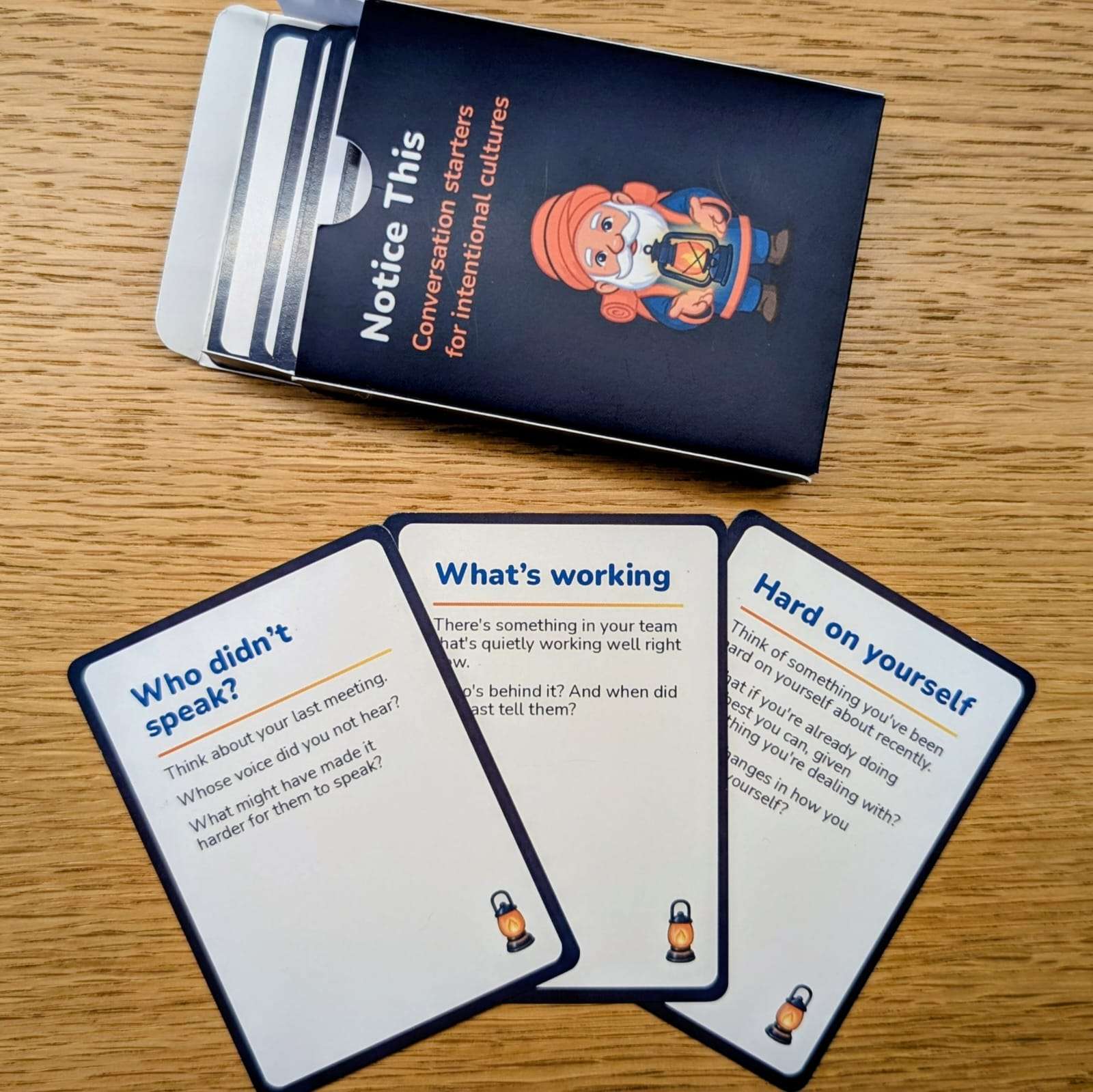
A few weeks ago, we launched our Hu.Be platform at the Engage Employee Summit in London. And to engage with people, we created this “conversation starters” card deck.