A reader asked how we should react when we encounter hatred and cruelty. Although we may reflexively feel righteous anger, there is also a role for empathy.
Your post on radical empathy and lovingkindness makes me think you may be able to help me with a question I’ve had for a long time.
Just for background, I have studied and practiced meditation on and off for decades and have practiced yoga consistently for years.
I have found that it’s difficult to have feelings of lovingkindness for people who actively and purposefully promote hatred towards others.
For example, when Trump mocked the disabled reporter and his followers laughed, I felt as physically ill as when my son told me a Trump supporter had tried to attack him (he’s Asian).
Likewise, when I hear about children at the border or see the willful cruelty exhibited by so many in these times, I have no feelings of empathy at all, just a burning anger and rage, which are corrosive but, in my opinion, justified.
My question to you is why should I have empathy for people who so obviously hate me, my family, and my friends?
Dear Reader:
Thank you for your question. I’m really honored that you would ask me this, a profoundly troubling question for so many of us at this moment in the life of our country and our world.
Your question made me think. Here’s my take, and I’d welcome further thoughts from you and other readers.
I appreciate your response to cruelty. Feeling sick to your stomach shows your empathy with the victims, and thank goodness for it; thank goodness you, and I think most humans, are hardwired to feel other people’s suffering. This instinct is what binds us together and prevents cruelty in most of our interactions. I think most of us feel agony when we see a defenseless person, especially a child, attacked.
The other response you mentioned, the burning anger, can also be a very helpful response. Anger is clarifying. It shows us where our boundaries are and alerts us to defend them.
In the long term, though, I don’t find anger to be the best guide or motivator. As you noted in your question, living with anger is corrosive. It becomes a burden if we carry it with us long term. It may strengthen our sense of purpose or resolve, but it constricts us and closes our hearts. It doesn’t allow us much creativity or flexibility in our response to a situation.
Now to your question about the role of empathy in this situation. To recap the definition from my previous blog post, empathy is imagining someone else’s thoughts and, as much as possible, entering into their felt experience.
Why would we want to enter into the felt experience of a hateful or cruel person?
It doesn’t seem to be a pleasant emotional space to occupy. And we don’t wish to feel emotionally close to this person.
However, there are other possible goals to be reached through empathy even with the most violent, cruel and hateful people.
Goal #1: Freedom from anger
Trying to understand the felt experience of a cruel person is like trying to understand a plane crash. We feel shocked and horrified by the consequences, but there is also the central awareness of the little black box, the vault that holds the answers about the causes. Why did this plane crash? Why did this person’s moral and empathic compass fail?
The story held by the cruel person’s “black box” may be about damage from a negligent or abusive childhood, and the person may be lashing out because of a deep pain inside. Or the box may reveal a personality disorder that prevents them from feeling empathy and causes them to be self-centered, power-hungry, or sadistic. They may have grown up and lived their lives surrounded by the ignorant belief that their victim group is less than human. Any combination of these factors may be in play.
Accepting that the person is the way they are for a reason is a first empathic step. Something happened to make the person that way. Even if they are willfully cruel, what gave them that perverse willfulness? We don’t know, but there is a story there, a chain of cause and effect, hidden to our eyes.
Just recognizing the existence of the black box can be a huge relief. We stop expecting the person to feel the way we do, to understand what we understand.
Letting go of these unmet expectations may free us from the anger. We recognize that people are just messed up, and shouting at them inside our heads will not change that. We can shrug our shoulders, mystified, and then get to work ameliorating the damage, feeling determined but not angry.
Goal #2: Understanding for effective opposition
If our goal is to prevent hatred and cruelty by understanding our opponent, empathy is the key that opens the black box.
To be clear, trying to understand a person is not the same as excusing their actions. I’m thinking in practical terms. What can be done to make this situation better?
Great crusaders against cruelty and hate, such as Mohandas Gandhi, Nelson Mandela, or Martin Luther King achieved much of their effectiveness by understanding their oppressors, not demonizing them, finding what was human and good in them and connecting to that part.
Gandhi understood that the British were attached to their humanitarian values, even as they subjugated the Indian population, so he was able to appeal to their better instincts by forcing them to confront their own racism and tyranny. Nelson Mandela learned Afrikaans while he was in prison, so that he could communicate with his oppressors heart to heart in their own language. (I met one of his jailors, who told me the story of how Mandela befriended him and helped him become a better person.) Martin Luther King constantly appealed to our common humanity, even when he was shown utter inhumanity.
When we find ourselves entrenched in conflict, this kind of empathy may be the only practical path to healing.
Goal #3: Being a beacon of compassion in the world
Beyond understanding cruel peo
ple for strategic reasons, should we feel actual compassion for them? Should we want the best for them?
Certainly we don’t wish them success in their hateful acts.
However, we can think of their cruelty as reflecting something inside them that is fractured, and wish them healing. We can wish for their eyes to be opened to morality, humaneness, and deeper connectedness with others. When Nancy Pelosi says that she prays for Donald Trump all the time, I imagine that, as a sincere Catholic, she means it in this sense.
To soften our hearts toward people who are cruel, and sincerely wish them well in this way, for their own sake, it can help to look inside at our own cruelty or callousness. If we’re honest, I think we can all find examples.
In childhood, I joined in mocking an overweight classmate on the school bus, and, to my shame, I clearly remember enjoying the clever rhyming chant and ignoring its impact. In my adult life, I have walked by homeless people shivering on the sidewalk with barely a glance. I have ignored pleas for help from worthy charities, scrolling past videos of desperate refugees on Facebook to watch a cat video instead. I have bought and eaten animal products from inhumane factory farms.
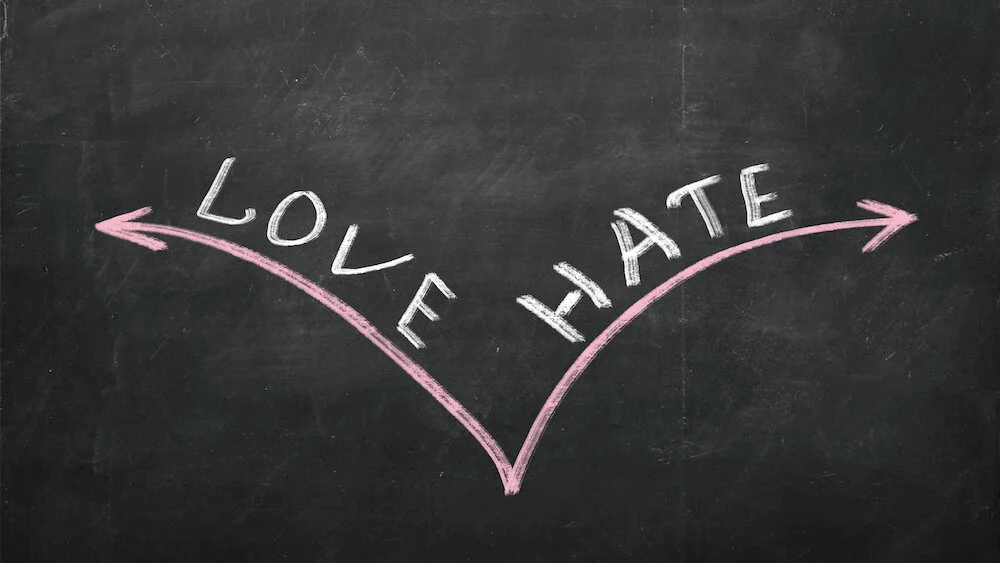
We all live on a spectrum between pure hate and pure love. Most of us are somewhere in the middle, and over our lifetimes, we have the opportunity to take steps, on a journey towards the loving end.
The cruel person may be far behind us on the journey, but there may also be people far ahead of us, and everyone who is ahead can serve as a beacon for those behind.
“It is easy enough to be friendly to one's friends. But to befriend the one who regards himself as your enemy is the quintessence of true religion.”
, Mohandas Gandhi
Wisdom traditions from all corners of the world affirm the practice of love and forgiveness, even towards the worst among us. Look into your own tradition; you will find powerful examples. And you’ll find that the saints and sages who extend their circle of compassion do not feel debased, but peaceful, liberated, and fulfilled.
Opening our hearts is a worthwhile lifelong practice. Feeling empathy for an oppressive political leader may feel like too much of a stretch right now, but we can start with someone close, and gradually expand. Even if we don’t reach the ideal of universal love, we can move toward the more compassionate end of the spectrum a bit each day, each year, and each decade.
*****
To summarize, in answer to your question: the main step I recommend is recognizing that there is some history or cause behind the actions that we do not know, a black box we probably can’t access. If we could, we would understand how and why the hatred or cruelty arose. This recognition helps us let go of anger.
For a second step, I recommend empathy as a way to open the black box and engage constructively. We try to understand people so that we can work to solve the problem, on the individual and societal levels.
The final step, for those who are spiritually inclined and wish to open their hearts to all of humanity, I recommend practicing radical empathy and compassion. Consider each and every person as a human who is doing the best they can with the brain and heart they were given, the family they were born into, and the experiences that life has dealt them. Consider, “There, but for the grace of God, go I.” Extend the same compassion you would want for yourself when you realize you’ve done wrong.
“Returning hate for hate multiplies hate, adding deeper darkness to a night already devoid of stars. Darkness cannot drive out darkness; only light can do that. Hate cannot drive out hate; only love can do that.”
Why do obvious team problems go unaddressed? The usual fixes, from pulse surveys to away days and perks, soothe the symptoms without touching the cause. So what stops everybody from going beyond the surface?
I've just started a round of interviews to solve this mystery. If you're a team leader, senior manager, or executive and you'd like to be interviewed, send me a message. I'll share the outcome of the study with everyone who takes part.
A few weeks ago, we launched our Hu.Be platform at the Engage Employee Summit in London. And to engage with people, we created this “conversation starters” card deck.